ChatGPT Search vs Google Search: What US Marketers Need to Know
ChatGPT Search synthesizes one cited answer; Google shows blue links plus an AI Overview. How the mechanics change visibility to measure. Audit free.
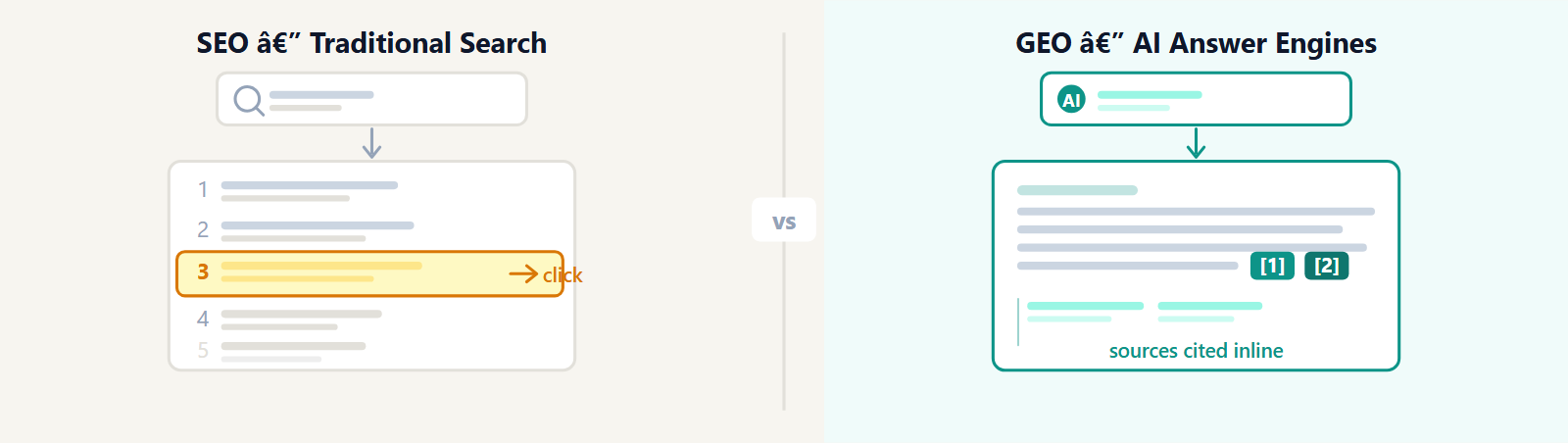
Both are called "search," and marketers often plan for them as if they're the same channel with a new coat of paint. Mechanically, they're not.
Answer format
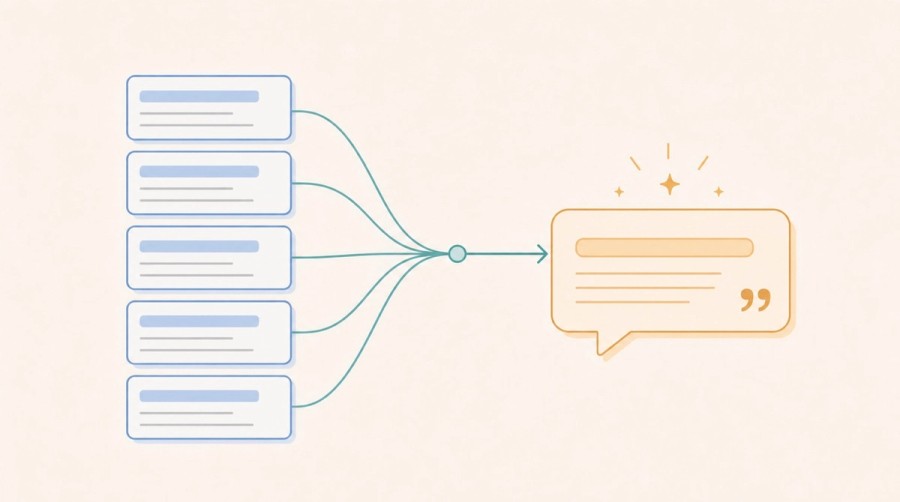
Google Search still centers on ten ranked links, now often preceded by an AI Overview summarizing several sources. ChatGPT Search leads with a single synthesized answer and inline citations — there's no ranked list underneath to fall back on if you're not in the synthesis.
Click-through incentive
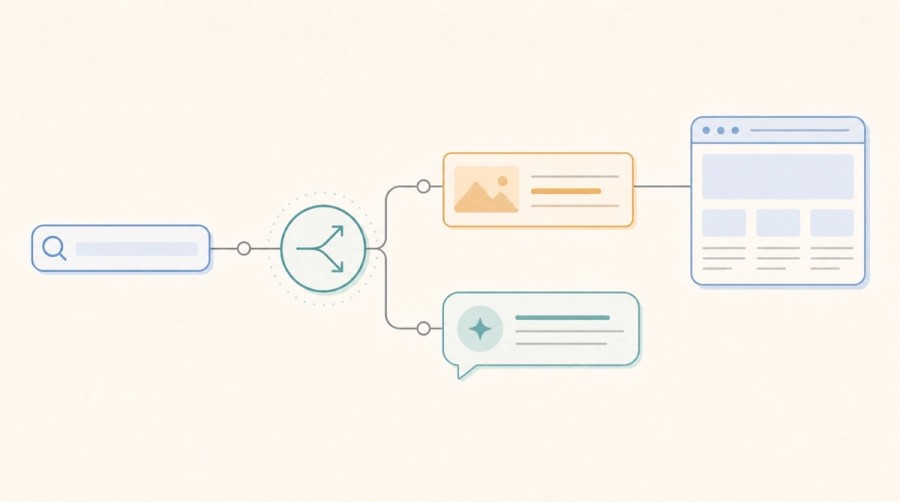
A Google result still competes on a title and description designed to earn a click. A ChatGPT citation is often enough on its own — the user may never click through, which changes how you should value a citation versus a traditional visit.
Query behavior
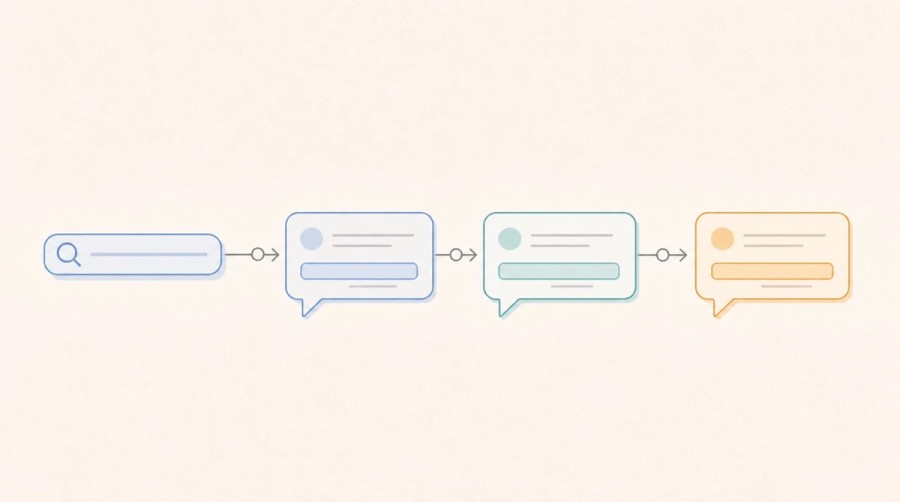
ChatGPT Search sessions tend to be more conversational and follow-up-heavy — a user refines a question across several turns rather than issuing a fresh keyword query each time. That shifts value toward content that answers well within a conversation, not just a single query match.
What this means for US marketers
Keep investing in classic SEO fundamentals — they still drive the larger volume channel. Layer GEO-specific work on top: direct, quotable answers, clear entity signals, and structured data. See our practical guide to appearing in ChatGPT and Perplexity and our breakdown of 7 key differences between GEO and SEO.
Further reading
Apply this guide
Check whether ChatGPT can understand and cite your site.
Start with the ChatGPT visibility path when the goal is brand mentions, answer inclusion, and source eligibility in ChatGPT-style answers.
- Best for prompts where ChatGPT should mention the brand or cite the domain.
- Next metric: visibility by prompt cluster, not only organic sessions.
Frequently asked questions
Is ChatGPT Search replacing Google Search for US users?
Not yet at scale — Google still handles the overwhelming majority of US search volume. But ChatGPT Search usage is a growing share of research and recommendation-type queries specifically, which is where GEO effort pays off first.
Do I need a different content strategy for each?
The foundations overlap heavily — crawlable, well-structured, authoritative content helps both. The difference is in measurement and in writing for direct quotability rather than just keyword coverage.
Get the monthly State of GEO report
AI search readiness benchmarks, adoption stats, and the actions that move the needle — delivered monthly. No spam.
By submitting, you agree to receive the monthly GeoReady newsletter: benchmark data from the State of GEO dataset, practical GEO guidance, and product updates. You can unsubscribe anytime. See our Privacy Policy.