AI visibility guides for people who need the system to make sense.
index: guides · 69 published
Practical, research-grounded walkthroughs for making your site visible and citable to AI answer engines. No guaranteed-ranking promises — just the technical and content signals that help models find and quote you.
01
Foundations
AI SEO, GEO, llms.txt, and crawler access.
02
Citability
How answer engines choose sources and references.
03
Execution
Checklists and implementation paths for real sites.
Does the GEO score predict whether Perplexity cites a page? A pre-registered test
We tested, with a plan fixed in advance, whether the GEO score predicts Perplexity citations on 341 pages. No effect was detected. Numbers and limits inside.
published: October 17, 2026
Why Your SaaS Docs Are Your Best GEO Asset
Documentation is often the most precise, technical, citation-friendly content a SaaS company owns — and the most overlooked GEO asset.
published: October 15, 2026
GEO for Webflow: How to Make a Webflow Site Citable by ChatGPT, Perplexity & AI Overviews
How to set up GEO on Webflow: robots.txt rules for AI crawlers, the native llms.txt upload, JSON-LD in custom code, and a free audit to check the result.
published: October 13, 2026
ChatGPT Shopping: How Product Feeds Get Selected for Recommendations
ChatGPT Shopping draws on structured product data and feed content, not a marketing pitch. Here's what actually determines whether a product gets recommended.
published: October 12, 2026
Optimizing Comparison Pages to Win "vs" Prompts in ChatGPT
"X vs Y" is one of the highest-intent SaaS query patterns, and AI systems now often answer it directly. Here's how to structure a comparison page that gets quoted.
published: October 8, 2026
What Is AI Share of Voice? (And How to Measure It)
AI share of voice is your brand's presence across AI answers vs competitors. How to compute it manually and what GeoReady actually tracks.
published: October 7, 2026
How to Measure AI Visibility
How to measure AI visibility: GEO readiness score, citation presence, AI referral traffic, and share of voice — and which parts are free.
published: October 7, 2026
How to Choose a GEO Tool: An Evaluation Framework
A vendor-neutral framework for evaluating any GEO tool: what it measures, engine coverage, methodology, output type, pricing, and data ownership.
published: October 6, 2026
What Is a GEO Audit?
A GEO audit checks whether AI assistants can retrieve and cite your site. See what it covers, how it differs from an SEO audit, and run one free.
published: October 5, 2026
What Are AI Citations? (And Why They're Not the Same as Rankings)
AI citations are when ChatGPT, Perplexity, or Google name your site as a source. What they are, why they matter, and how to check yours.
published: October 2, 2026
What Is AI Visibility?
AI visibility is whether AI engines like ChatGPT and Perplexity can retrieve, cite, and mention your site — different from search rankings.
published: October 2, 2026
Does llms.txt Improve Your GEO Score? What Three Editions of Data Show
llms.txt adopters score 20-24 points higher across three State of GEO editions — correlation, not proof it causes the gain.
published: September 24, 2026
Shopify Already Generates agents.md and llms.txt — Here's What That Means
Every Shopify store auto-generates /agents.md, /llms.txt, and /llms-full.txt. What's built in, when to customize, and what not to touch.
published: September 23, 2026
What Is the llms.txt Standard? The Format Spec, Explained
llms.txt's format comes from llmstxt.org, not a standards body. See the exact required vs optional structure, the link syntax, and where files are listed.
published: September 22, 2026
llms.txt Examples: 4 Real Files, Annotated
See 4 real llms.txt files fetched live on Sept 1, 2026, an annotated walkthrough of what each section does, and a template you can copy.
published: September 19, 2026
The llms.txt Placeholder Problem: Why Half of Adopters Ship an Empty File
52% of llms.txt adopters ship a placeholder file, per August 2026 State of GEO data. What counts as a placeholder, why it happens, and how to check yours.
published: September 19, 2026
How to Benchmark Your AI Visibility Against Competitors
A practical workflow for benchmarking your AI visibility against competitors: pick a set, sample prompts, and compare GEO-score readiness.
published: September 18, 2026
Google AI Mode Optimization: What Actually Matters Right Now
What Google AI Mode is, how it differs from AI Overviews, and the readiness signals you can actually optimize today.
published: September 18, 2026
Dashboard vs. Action Plan: Why a GEO Score Needs Both
Most GEO tools hand you a dashboard. What changes results is a prioritized action plan — and GeoReady's own free report already includes one.
published: September 11, 2026
GEO Research, Explained: What the Papers Behind AI-Visibility Scoring Actually Found
A plain-language walkthrough of two research papers behind Generative Engine Optimization, one presented at KDD 2024 and one an arXiv preprint: what was tested, what was found, and what was not.
published: September 10, 2026
LLM Seeding and GEO: What's the Difference, and Do You Need Both?
LLM seeding places your brand in sources AI models draw from. Here's how it differs from GEO, what's legitimate, and what research actually supports.
published: September 10, 2026
GEO for Higher Ed: Getting University Programs Cited by AI Assistants
How prospective students research programs through AI, why .edu authority alone isn't enough, and how to make program and research pages citable.
published: September 9, 2026
How Often Should You Monitor Your AI Visibility?
How often to monitor AI visibility depends on how fast your site changes, not "as often as possible." A cadence framework by site type and plan.
published: September 7, 2026
What Is a Good GEO Score?
A good GEO score is 68+ (the "good" band). Most sites average in the mid-50s. See real score bands, what moves your score, and how to check yours free.
published: September 5, 2026
AEO vs GEO: same practice, different vocabulary?
AEO and GEO both mean optimizing content for AI answer engines. What actually differs — origin, community, emphasis — and what matters for your site.
published: September 4, 2026
GEO Prompt Research: How to Find the Prompts Your Buyers Actually Ask AI Engines
Keyword research targets queries; GEO targets prompts. A practical method to find, group, and prioritize the questions buyers ask AI engines.
published: September 4, 2026
Google AI Overviews for Local Businesses: A Practical Playbook
Local 'near me' queries are exactly the kind AI Overviews love to answer. Here's what actually moves the needle for a local business.
published: September 3, 2026
What is Answer Engine Optimization (AEO)?
Answer Engine Optimization (AEO) means structuring content so AI answer engines can extract, trust, and cite it. What AEO is, and how it relates to GEO.
published: September 3, 2026
How Google's AI Overviews Actually Cite Sources (Technical Breakdown)
The citation carousel, multi-source attribution, and why there's no exported ranking behind an AI Overview. The citation mechanism, explained. Audit free.
published: August 31, 2026
Does HowTo Schema Still Matter for AI Search in 2026
Google scaled back HowTo rich results, but that's a different question from whether HowTo schema still helps AI answer engines parse step-based content.
published: August 31, 2026
What Is WebMCP? The Next Layer of AI Discovery
WebMCP lets a page declare interactive tools for AI agents, not just content. What it is, how it differs from llms.txt, and how readiness is actually measured.
published: August 31, 2026
How Google Gemini and AI Mode Cite Sources
Google AI Overviews vs Gemini the assistant, what Grounding does, and what Google-Extended actually controls. What to optimize today. Audit free.
published: August 31, 2026
How Claude Cites Sources: What We Know So Far
ClaudeBot, Claude-SearchBot, and Claude-User do different jobs. What's confirmed about Claude citations and what to check first. Audit site free.
published: August 31, 2026
GEO for Agencies: Auditing and Reporting AI Visibility for Clients
How to add AI-visibility audits to a retainer: what to check, how to turn a nine-category score into a client report, and how to price it. Audit free.
published: August 31, 2026
Organization & sameAs Schema: Building Entity Authority for LLMs
The sameAs array is how you tell AI systems, in a machine-readable way, that your website and your social/Wikipedia/review profiles are the same entity.
published: August 31, 2026
AI Overviews and E-E-A-T: Does Author Authority Still Matter
Google's quality guidelines never went away just because the answer format changed. Here's how E-E-A-T signals actually factor into AI Overview citations.
published: August 27, 2026
Product Schema for AI Shopping Assistants
AI shopping assistants increasingly recommend directly from structured product data, not marketing copy. Here's the Product schema that actually gets read.
published: August 24, 2026
AI Overviews Tracking: What Tools Exist and What Still Requires a Manual Process
Is there a real AI Overviews tracker? What tools actually track today, a repeatable manual workflow, and how to monitor the signals that drive citations.
published: August 20, 2026
FAQPage Schema for AI Search: Complete Implementation Guide
FAQPage schema turns Q&A into self-contained statements AI synthesis can lift. Exactly how to implement it correctly. Get your free audit.
published: August 17, 2026
Google AI Overviews vs. Featured Snippets: What Changed in 2026
Featured Snippets picked one page as the single winner. AI Overviews synthesize several. Here's exactly what changed, and what it means for how you write.
published: August 13, 2026
GEO for E-commerce: Getting Products Recommended by AI Shopping Assistants
GEO for e-commerce: how AI shopping assistants select products and what merchants fix first. Make your store citable by ChatGPT Shopping. Audit free.
published: August 6, 2026
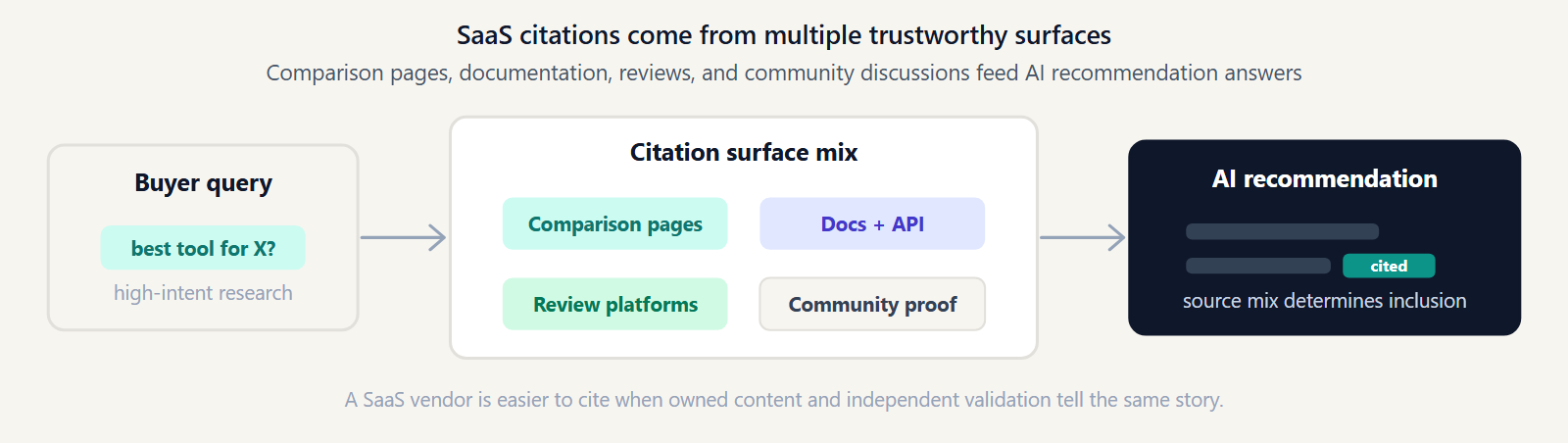
GEO for SaaS: How B2B Software Companies Get Cited by ChatGPT and Perplexity
B2B buyers ask ChatGPT what the best tool is before visiting vendor sites. How SaaS companies get included in that answer. Run your free audit.
published: July 30, 2026
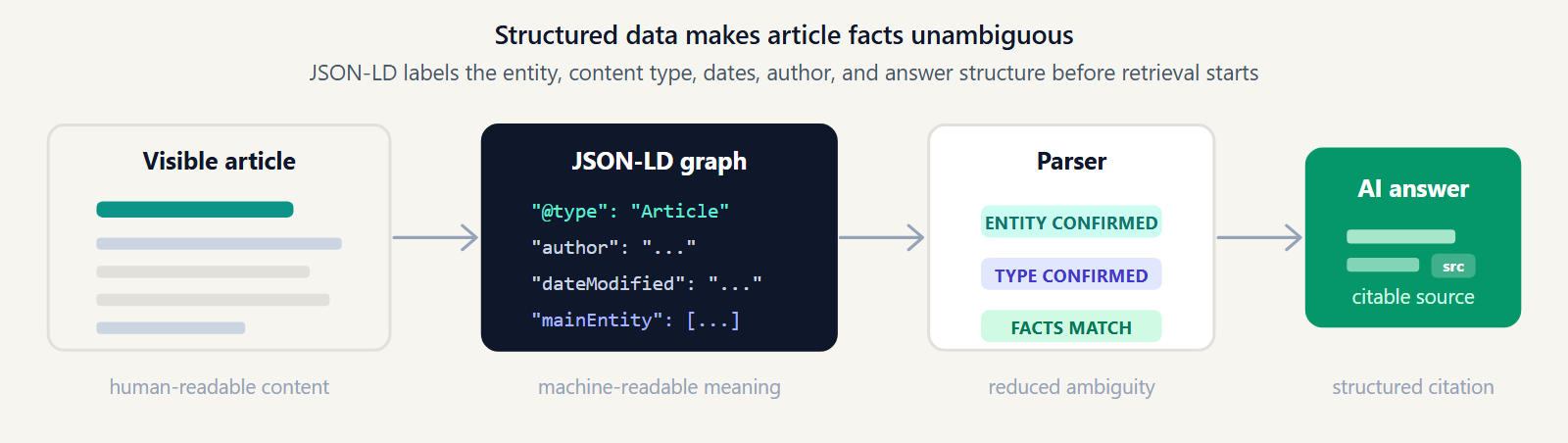
Structured Data for AI Citations: The Complete Schema Markup Guide
Schema guides AI engines to parse your page unambiguously and cite it correctly. Complete implementation guide from rich results to AI. Audit free.
published: July 23, 2026
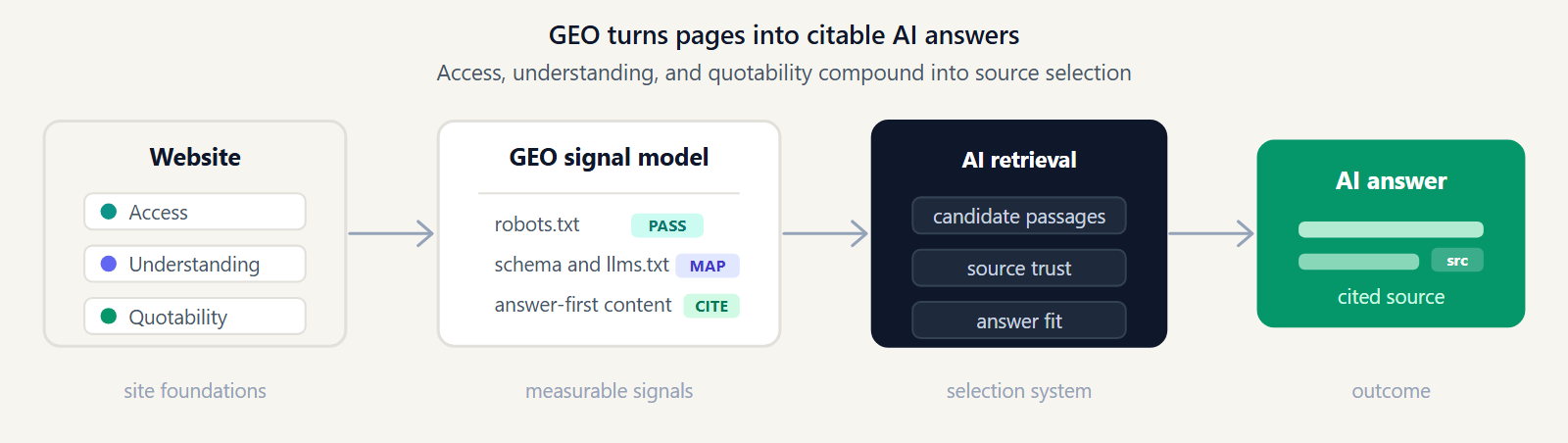
How to Optimize for Google AI Overviews in 2026
Google AI Overviews sit above blue links for most informational searches. How sources get selected and the concrete steps to get cited. Audit free.
published: July 16, 2026
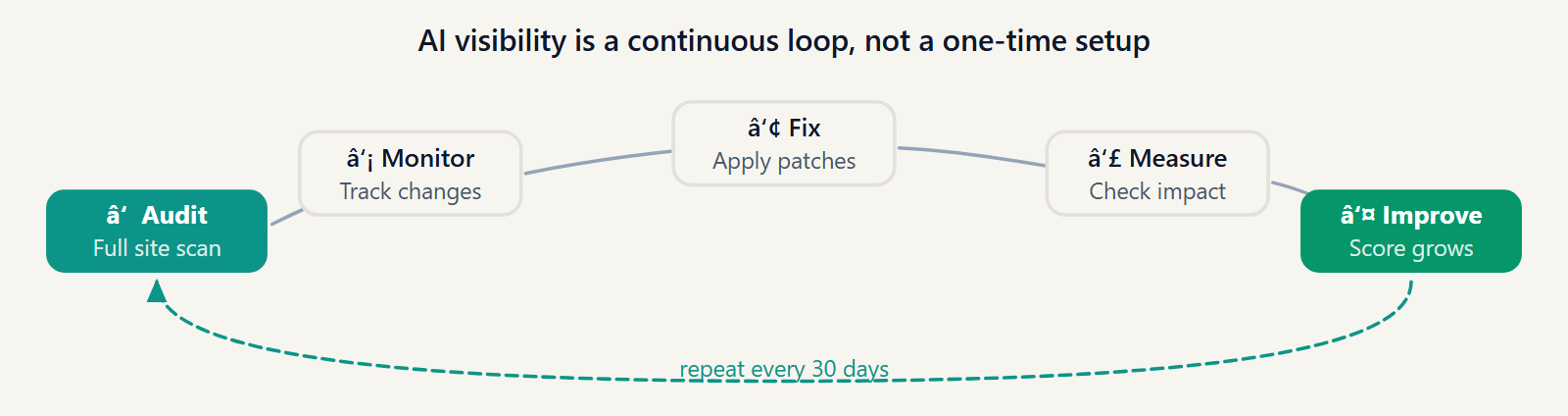
Is AI Search Traffic Actually Growing? What the Data Shows
ChatGPT Search, Perplexity, and Google AI Overviews are reshaping US search. What's directionally clear versus what's still unconfirmed. Audit your site.
published: July 15, 2026
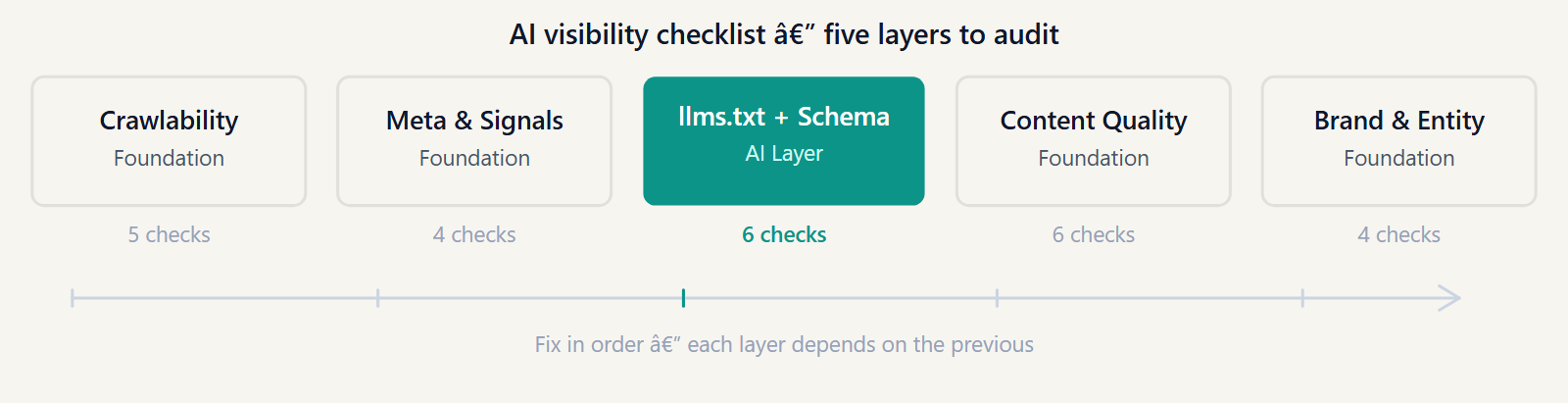
Free Tools to Check Your AI Search Visibility in 2026
A practical roundup of free tools — crawler checkers, llms.txt generators, manual prompt tests — to check AI visibility. Run an audit free.
published: July 15, 2026
How Long Does It Take to Get Cited by ChatGPT After Publishing?
There's no fixed timeline, but domain authority, crawl frequency, and structured data all shift it dramatically. Here's what actually drives the wait.
published: July 14, 2026
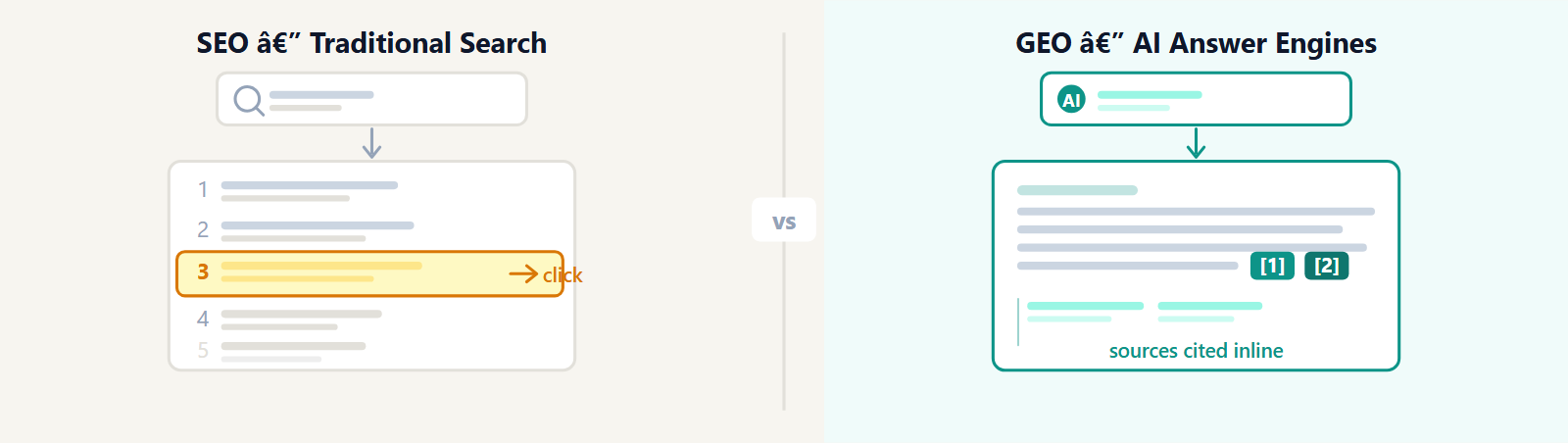
ChatGPT Search vs Google Search: What US Marketers Need to Know
ChatGPT Search synthesizes one cited answer; Google shows blue links plus an AI Overview. How the mechanics change visibility to measure. Audit free.
published: July 14, 2026
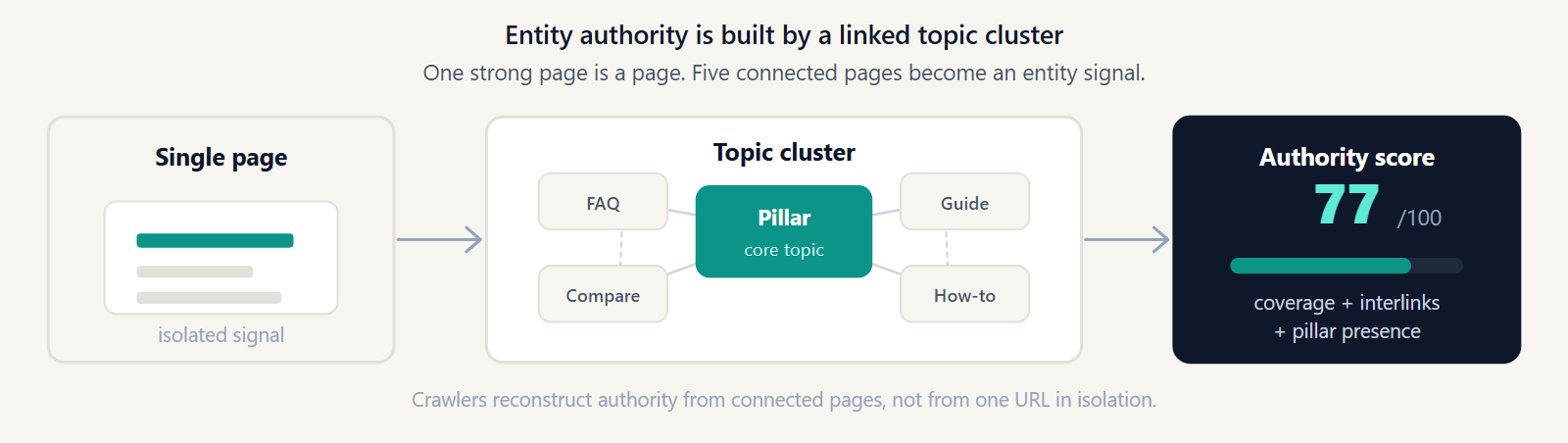
Do Backlinks Still Matter for AI Search Rankings?
Backlinks haven't disappeared as a trust signal, but AI answer engines weigh something else just as heavily: unlinked mentions across independent sources.
published: July 13, 2026
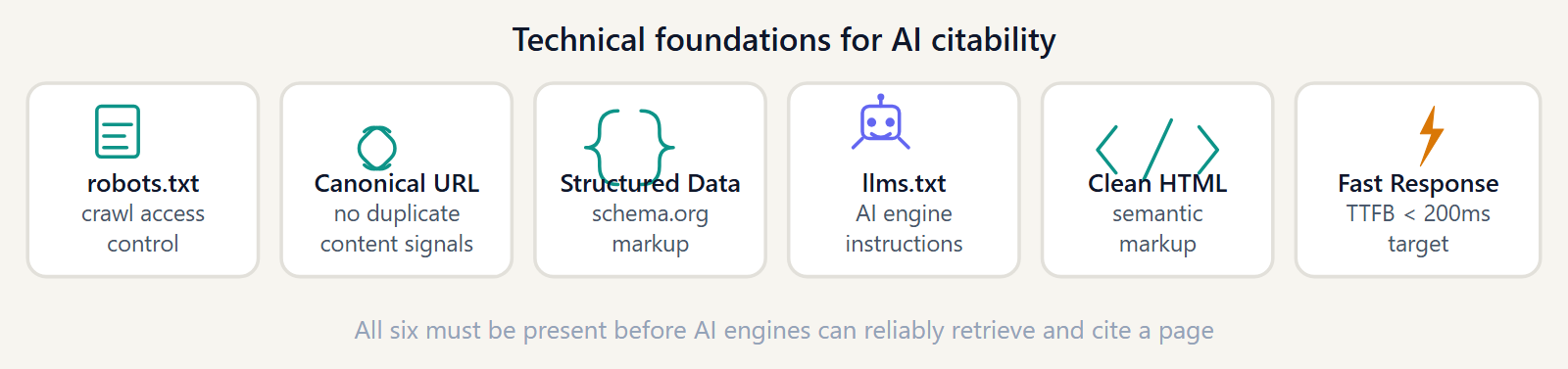
What Is an AI Crawler? The Complete List of Bots to Allow in robots.txt
Not all AI bots do the same job. Training crawlers, retrieval bots, and on-demand fetchers — and which you actually need to allow. Check site free.
published: July 13, 2026
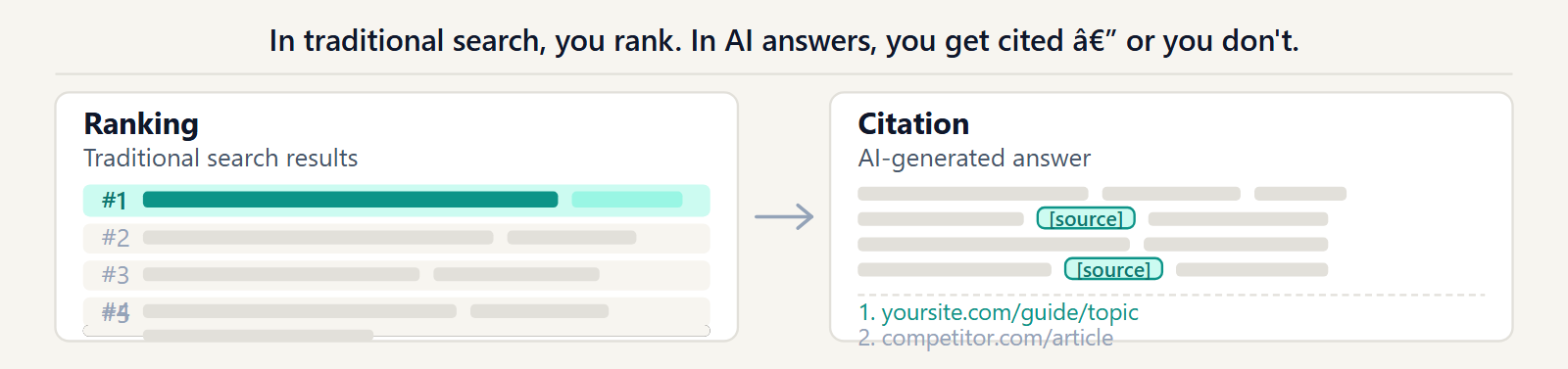
How Perplexity Chooses Sources: What We Know So Far
Perplexity cites multiple sources per answer, but not randomly. Here's what's observable about how it selects and weighs them.
published: July 12, 2026
GEO vs Traditional SEO: 7 Key Differences Explained
Ranking vs citation, backlinks vs mentions, keywords vs entities: seven concrete ways Generative Engine Optimization differs from SEO. Audit free.
published: July 12, 2026
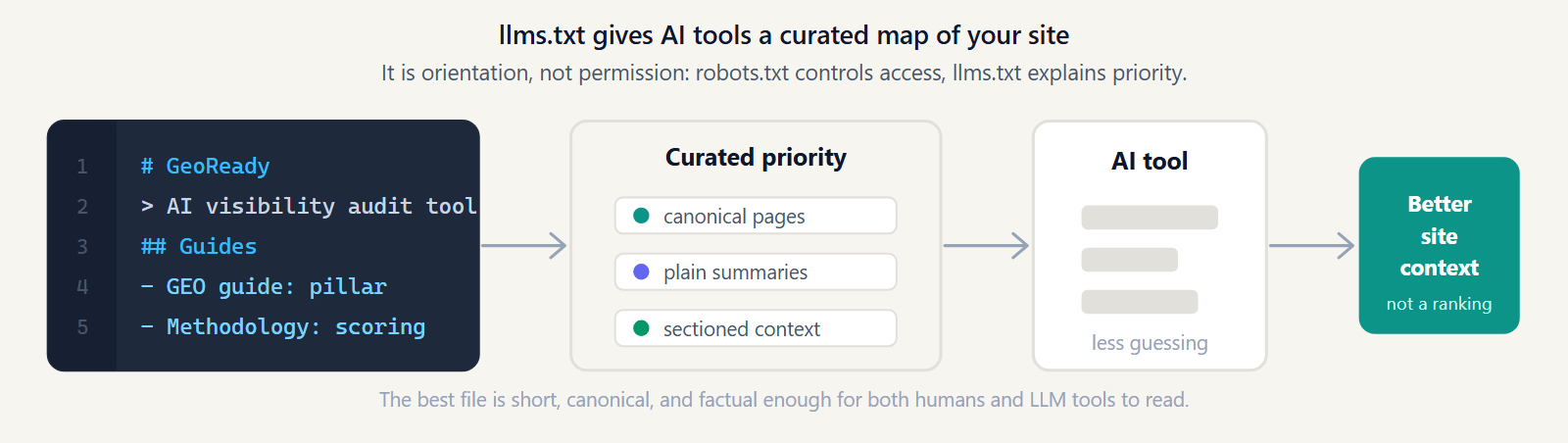
llms.txt Explained: Do You Actually Need One in 2026?
llms.txt shows up in every GEO checklist. Here's what it actually does, what it doesn't do, and how to decide if your site needs one.
published: July 11, 2026
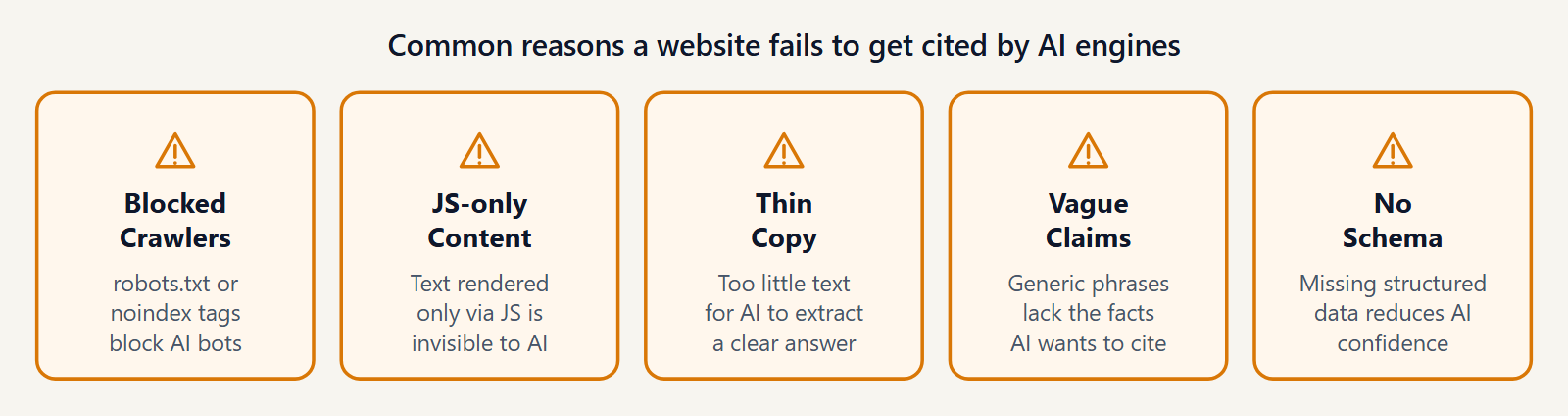
5 Signs Your Website Isn't Being Cited by AI (and How to Fix Each One)
Zero AI referrals, invisible in 'best X' answers, competitors cited instead. 5 signs your site is invisible to AI search — and the fix. Audit free.
published: July 11, 2026
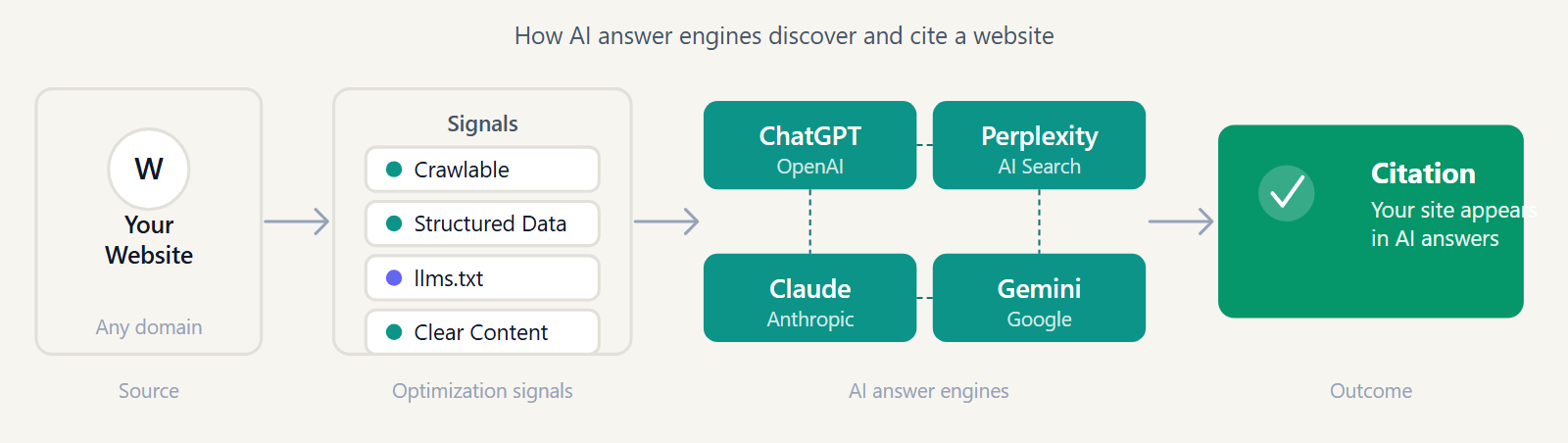
How to Check If ChatGPT Can See Your Website (Free Test)
A 5-minute test to check if AI search engines can access and cite your site — plus exactly what to fix if they can't. Run the free audit.
published: July 10, 2026
Does robots.txt Block ChatGPT? How to Check and Fix It
Which robots.txt rules block ChatGPT, Perplexity, and other AI crawlers — and the minimal fix that lets them back in. Check your site free.
published: July 10, 2026
Prompt Injection Attacks on AI Crawlers: What Every Website Owner Should Check For
8 known ways hidden instructions for AI crawlers can hide inside a page — CSS, Unicode, HTML comments. Learn how to check your own site free.
published: July 9, 2026
AI crawlers and robots.txt: what you need to know in 2026
Should you block AI crawlers in robots.txt? GPTBot, OAI-SearchBot, PerplexityBot explained — and why blocking makes you invisible to AI. Check free.
published: July 2, 2026
What is Generative Engine Optimization (GEO)?
Generative Engine Optimization makes your site citable by AI answer engines like ChatGPT and Perplexity. Learn what GEO is and how it differs from SEO.
published: July 2, 2026
How to Improve AI Visibility
Practical playbook to get cited by ChatGPT, Perplexity, Claude and Gemini: crawler access, llms.txt, JSON-LD schema, and entity signals. Audit free.
published: June 16, 2026

How to tell if ChatGPT and Perplexity are citing your brand.
Three ways to know if AI engines cite your brand: a 10-minute manual check, a free automated check, and ongoing monitoring — plus what to do per verdict.
published: June 11, 2026
Entity-based authority: why five pages beat one strong page
AI engines map entities and topic coverage, not keywords. How clusters, pillars, and internal links build citation-worthy authority. Audit free.
published: June 11, 2026
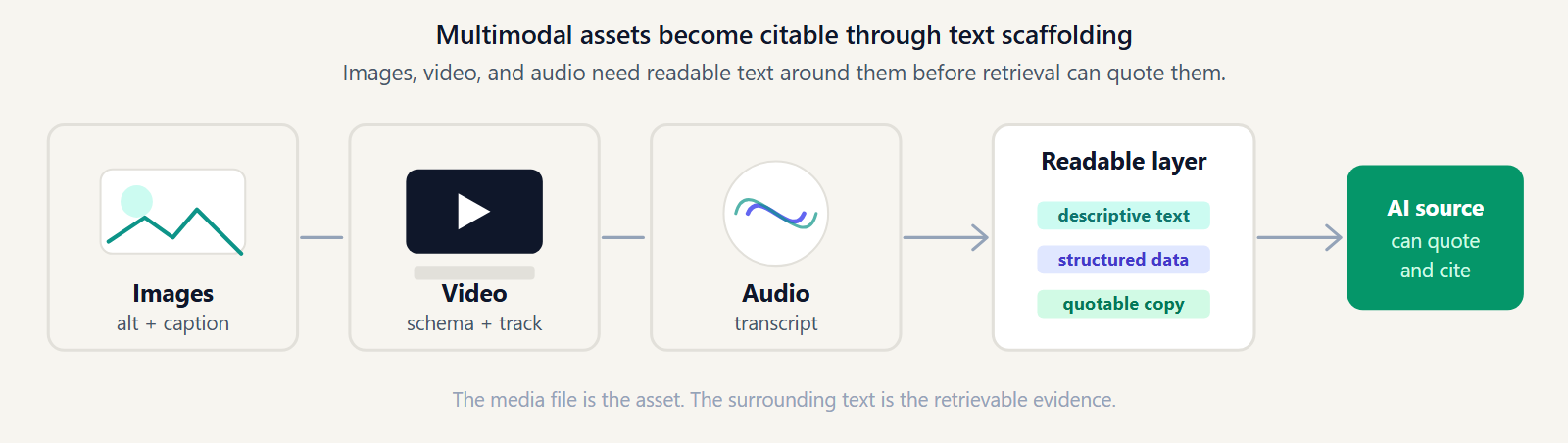
Multimodal GEO: making images and video citable
Make images and video citable by Gemini and GPT-4o through alt text, captions, VideoObject schema, and transcripts. A practical guide. Audit free.
published: June 11, 2026
Generative Engine Optimization: A Practical Guide to GEO
Learn what Generative Engine Optimization is, how GEO differs from SEO, and how to make your site crawlable, understandable and citable by AI search engines.
published: June 10, 2026
What Is llms.txt? A Practical Guide for AI Search Visibility
llms.txt is a Markdown file at your domain root that orients AI systems to your key pages. Format, example, and adoption data from 360 audited sites.
published: June 10, 2026
AI visibility checklist: how to make your website easier to find, cite, and recommend
A practical checklist of the technical and content signals that decide whether AI answer engines can find, parse, and cite your site, organized by category.
published: June 5, 2026
GEO vs SEO: what changes when AI engines become the interface
SEO and GEO share technical foundations but optimize for different goals. What stays the same, what changes, and where to focus when AI engines answer queries.
published: June 5, 2026
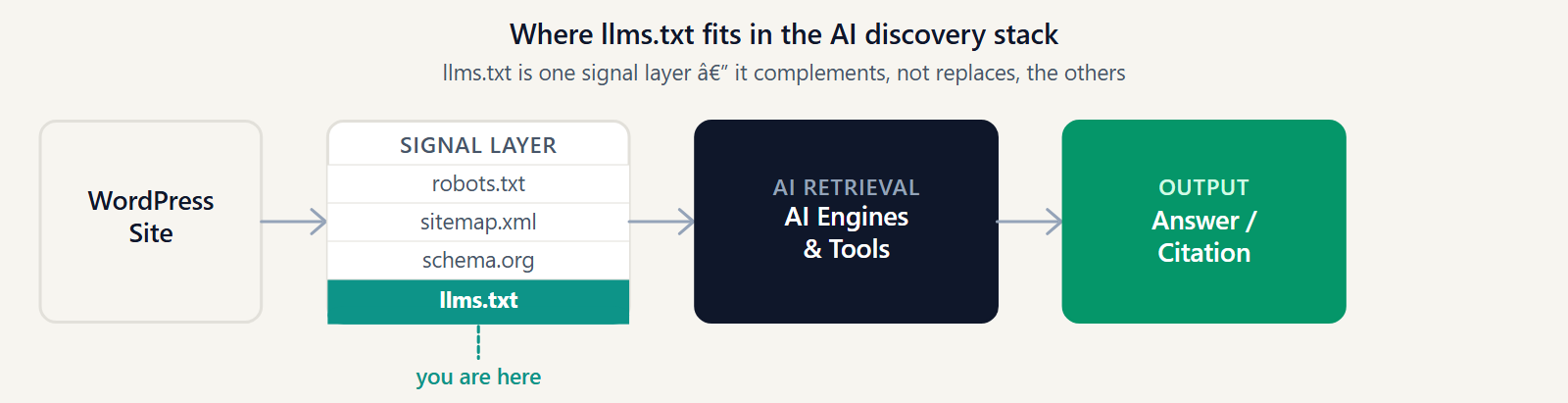
llms.txt for WordPress and AI visibility: a practical guide
llms.txt helps AI tools understand your site. What it is, what it does, and how to implement it on WordPress — manually, via functions.php, or a plugin.
published: June 5, 2026
How to appear in ChatGPT and Perplexity: a practical guide for 2026
Learn how to make your website appear as a source in ChatGPT, Perplexity, and other AI answer engines. Technical steps, content signals, and what the data says.
published: April 5, 2026
Free tools
Use the tools when a guide turns into an implementation task.
cost: $0 · no account
Free AI SEO audit
Check crawler access, schema, llms.txt, content quality, AI discovery, and entity signals before prioritizing fixes.
Audit
ChatGPT visibility checker
Use this path when the question is whether ChatGPT can understand, mention, or cite a website.
Visibility
Perplexity citation checker
Inspect source-backed answers and see whether Perplexity-style results cite your domain or competitors.
Citations
Free llms.txt generator
Generate a starter llms.txt from a sitemap, then publish the editable Markdown at the domain root.
Tool
Pages for commercial questions
Use these when the guide topic maps to a buyer, SaaS, WordPress, or monitoring workflow.
AI SEO audit for SaaS
Audit product, pricing, comparison, alternative, and docs pages before buyer-intent prompts send users elsewhere.
ChatGPT visibility audit
Find the access, entity, schema, or content blocker that keeps a page out of ChatGPT-style answers.
Perplexity citation monitoring
Move from one citation snapshot to recurring checks for source losses and competitor replacements.
llms.txt generator for WordPress
Generate the file, publish it at the WordPress domain root, then audit AI discovery and crawler access.
Frequently asked questions
What topics do these guides cover?
Three areas: foundations (AI SEO, GEO, llms.txt, crawler access), citability (how answer engines choose and weigh sources), and execution (checklists and implementation paths for real sites).
Are these guides free to read?
Yes. Every guide is free with no account required, along with the free AI SEO check and other tools linked throughout.
How do these guides relate to the GEO Optimizer scoring engine?
Each guide maps to specific signals in the open-source GEO Optimizer's nine-category score — the free tool measures whether a site actually implements what a given guide recommends.
How often are new guides published?
New guides are published on an ongoing basis, alongside monthly State of GEO benchmark reports that track what changes in AI search visibility.
New guides + State of GEO data, monthly
One substantive email a month: new GEO guides, fresh benchmark findings, and what changed in AI search. No spam.
By submitting, you agree to receive the monthly GeoReady newsletter: benchmark data from the State of GEO dataset, practical GEO guidance, and product updates. You can unsubscribe anytime. See our Privacy Policy.