Multimodal GEO: making images and video citable
Make images and video citable by Gemini and GPT-4o through alt text, captions, VideoObject schema, and transcripts. A practical guide. Audit free.
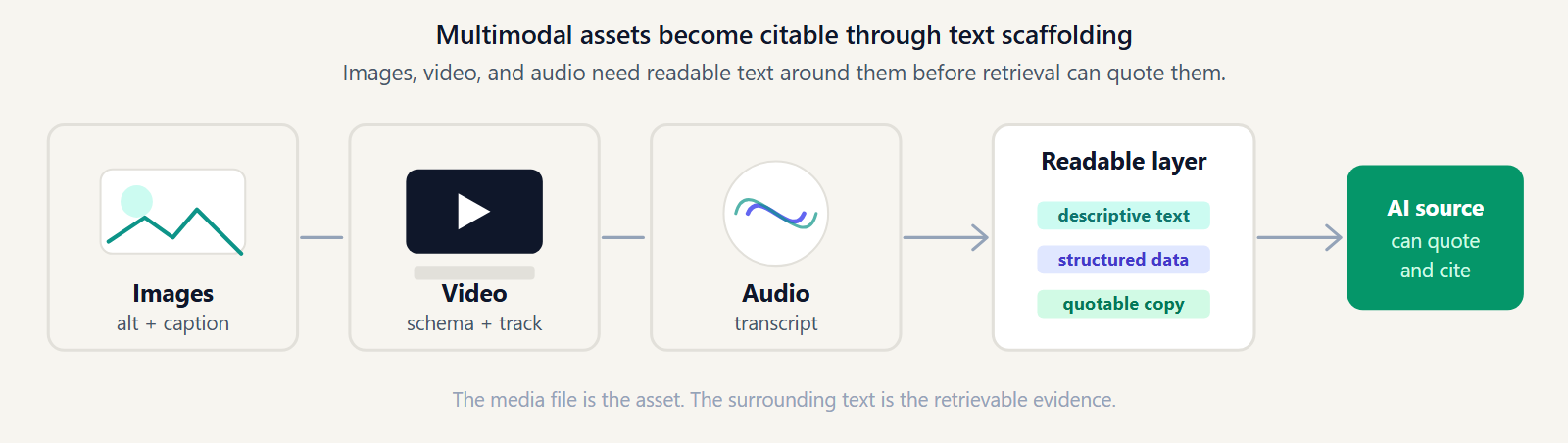
The engines are multimodal. Retrieval is still textual.
A multimodal model can describe an image when you paste one into the chat. But when an answer engine retrieves sources for a query, it works from indexed signals — and for media, those signals are overwhelmingly text. An instructional video with no transcript is a black box at retrieval time; the same video with captions, a transcript, and VideoObject schema is quotable, attributable content. AI engines index the transcript, not the pixels.
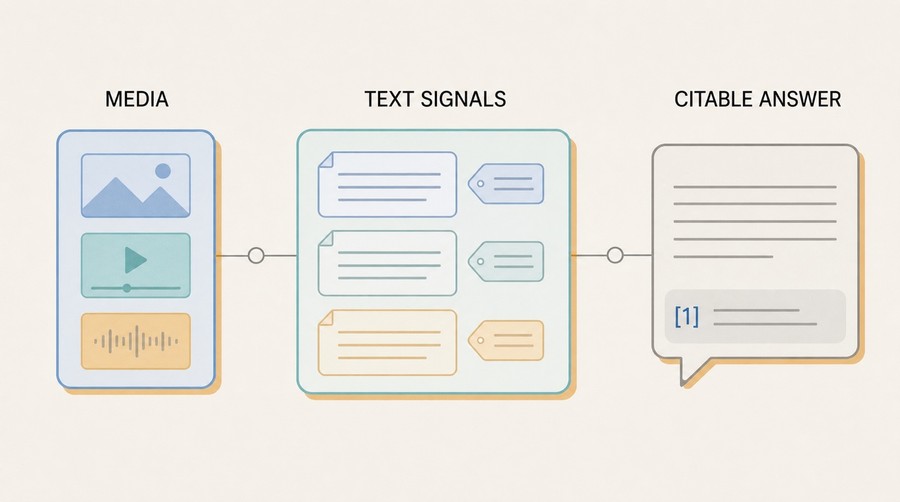
Images: alt discipline, captions, image sitemap
- Descriptive alt text on every meaningful image. Describe what the image shows and why it matters — "GeoReady audit dashboard with GEO score and crawler access matrix", not "dashboard.png" or "image". Filename-like and decorative-length alts are noise to engines and screen readers alike.
- Use
<figure>+<figcaption>for charts, screenshots, and diagrams. A caption is quotable text bound to the visual — exactly the unit an answer engine can lift and attribute. - Ship an image sitemap. List your indexable visuals with title and caption so discovery doesn't depend on crawl luck. Serve modern formats (WebP with srcset) with explicit width/height — performance and layout stability are part of the crawl budget story.
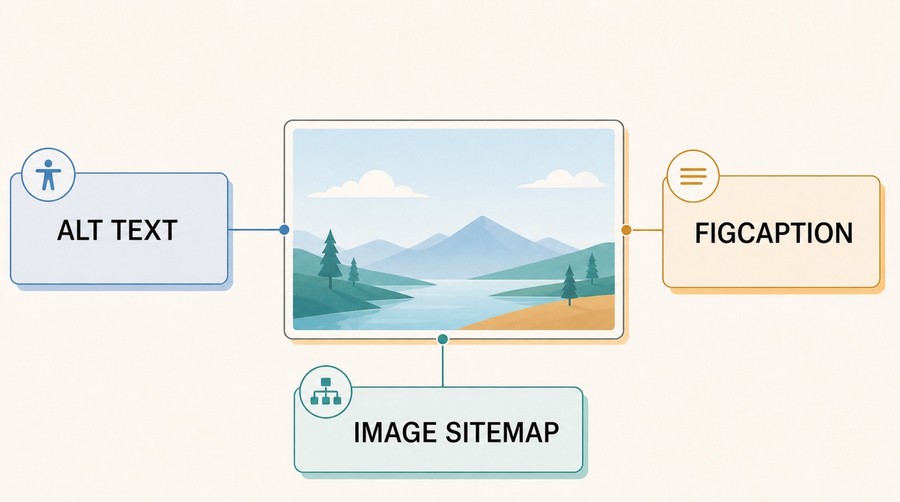
Video: VideoObject, captions, transcript
- VideoObject JSON-LD with
name,description,thumbnailUrl, anduploadDate— the minimum for engines to treat the video as a first-class content item rather than an opaque embed. This applies to YouTube/Vimeo embeds too: the schema lives on your page. - Closed captions via
<track kind="captions">for native<video>elements. Captions are time-aligned text — retrievable, quotable, accessible. - A text transcript on the page (or one click away, clearly labeled "transcript"). This is the single highest-leverage item: it converts N minutes of video into citable prose, and it is what answer engines actually quote.
Audio and podcasts
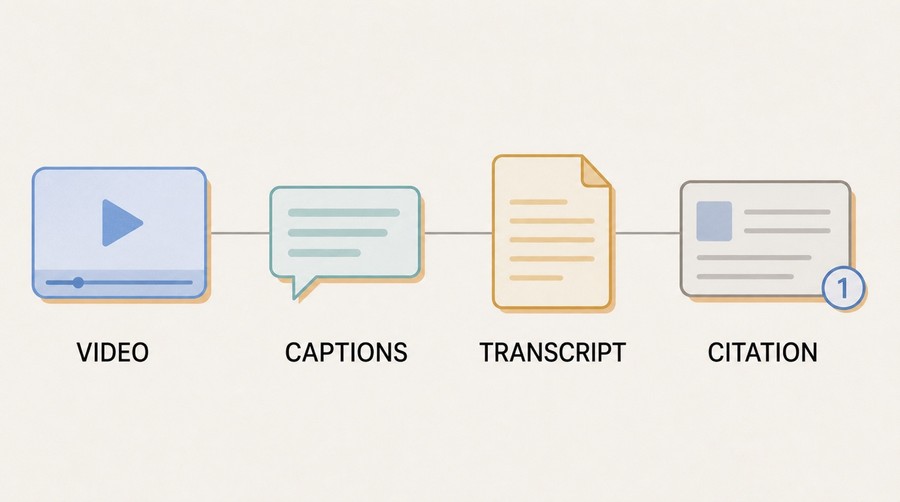
Same principle, smaller surface: mark episodes up with AudioObject or PodcastEpisode schema and publish a transcript per episode. Podcast SEO and podcast GEO are the same work — the transcript page becomes the citable artifact, and it can anchor a topic cluster of its own.
Audit it: the multimodal readiness check
The GEO Optimizer audit includes a multimodal readiness check that measures exactly this scaffolding — alt coverage, captions, VideoObject/AudioObject schema, subtitle tracks, transcripts — and grades only the media actually present on the page:
It's informational — it doesn't move the 100-point GEO score — but its recommendations go straight into your fix list. Run it from the free audit or with geo audit --url in the open-source CLI.
The 10-minute multimodal checklist
- Every meaningful image has a descriptive alt (≥ a short sentence).
- Charts and screenshots are wrapped in figure/figcaption.
- Pages with video carry VideoObject schema with the four core fields.
- Native videos have a captions track; every video page links a transcript.
- Podcast episodes have AudioObject/PodcastEpisode schema + transcript.
- An image sitemap lists your indexable visuals with titles and captions.
Further reading
- Generative Engine Optimization: the practical guide — the pillar this checklist belongs to.
- How to check if AI engines cite your brand — measure whether the work pays off.
- AI visibility checklist — all signals in one place.
Apply this guide
Run an AI SEO audit before you change pages.
Use the audit to find which signal is holding the site back: crawler access, schema, llms.txt, content clarity, AI discovery, or entity strength.
- Best for pages that need a technical and content baseline.
- Next metric: AI readiness score plus the weakest signal category.
Frequently asked questions
Can AI answer engines actually understand images and video directly?
At retrieval time, mostly no — engines index text signals, not pixels. An image or video needs alt text, captions, transcripts, and structured data to become quotable, attributable content.
What's the single highest-leverage fix for video content?
A text transcript on the page, or one click away. It converts minutes of video into citable prose — the format answer engines actually quote — and it's the item most sites skip.
What schema should video and podcast pages carry?
VideoObject (with name, description, thumbnailUrl, uploadDate) for video, and AudioObject or PodcastEpisode schema plus a transcript for podcast episodes.
Does the multimodal readiness check affect my GEO score?
No — it's informational and doesn't move the 100-point GEO score, but its recommendations go directly into the audit's fix list.
Get the monthly State of GEO report
AI search readiness benchmarks, adoption stats, and the actions that move the needle — delivered monthly. No spam.
By submitting, you agree to receive the monthly GeoReady newsletter: benchmark data from the State of GEO dataset, practical GEO guidance, and product updates. You can unsubscribe anytime. See our Privacy Policy.