Is AI Search Traffic Actually Growing? What the Data Shows
ChatGPT Search, Perplexity, and Google AI Overviews are reshaping US search. What's directionally clear versus what's still unconfirmed. Audit your site.
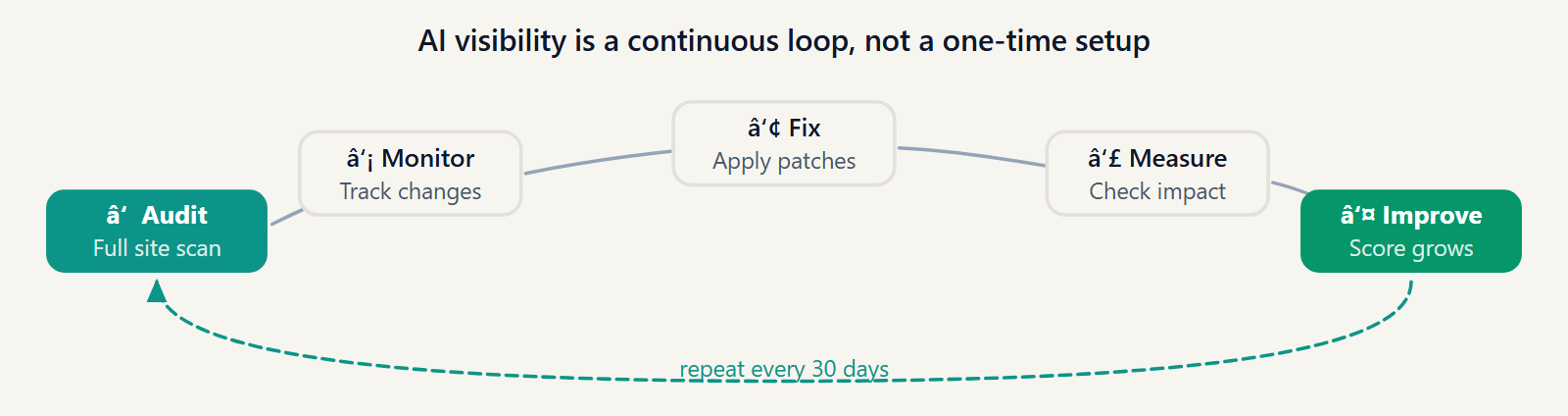
It's easy to find confident-sounding statistics about AI search growth online, and much harder to find ones that are actually verifiable. Here's what's directionally clear, and where we prefer to point to our own audited data instead of repeating unsourced numbers.
What's directionally clear

Conversational AI assistants have gone from a novelty to a daily habit for a meaningful share of US internet users. Google has rolled AI-generated overviews into a large share of its own results pages. Both of these are observable, not disputed.
What's less settled

Precise percentage figures for "how much traffic has shifted" vary wildly between reports, often depending on who funded the study and which industry vertical it sampled. We'd rather flag that inconsistency than repeat a specific number as settled fact.
The more useful question for most sites
Rather than debating an industry-wide percentage, the actionable question is narrower: is your specific audience's research behavior shifting toward AI assistants for your specific category of query? That's answerable by directly testing your own brand's visibility across AI engines, repeated over time.
Where we get our own data
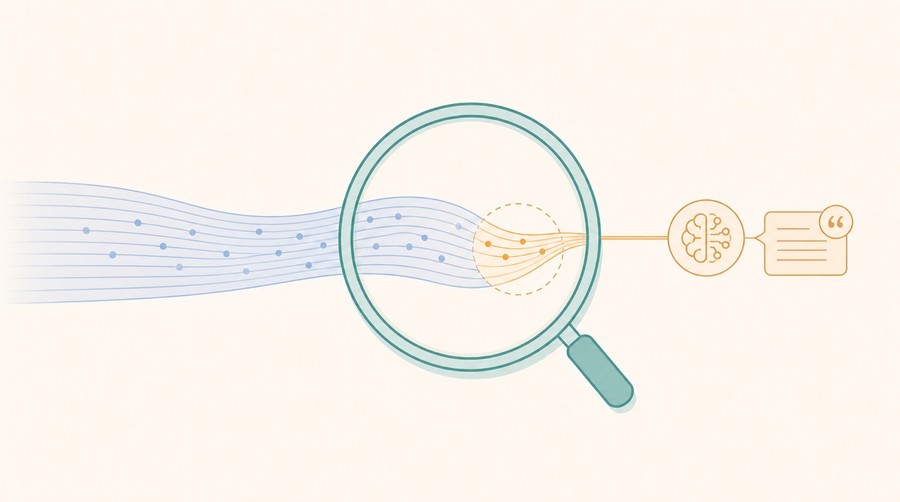
Our State of GEO report tracks AI-visibility signals across real audited sites rather than third-party estimates, and our research page lays out the methodology behind it.
Further reading
Apply this guide
Run an AI SEO audit before you change pages.
Use the audit to find which signal is holding the site back: crawler access, schema, llms.txt, content clarity, AI discovery, or entity strength.
- Best for pages that need a technical and content baseline.
- Next metric: AI readiness score plus the weakest signal category.
Frequently asked questions
Is AI search replacing traditional Google search?
Not wholesale. Traditional search still handles the large majority of query volume in the US. What's changing is the share of research and recommendation-style queries increasingly resolved through conversational AI assistants and AI-generated overviews.
Where can I see real data instead of general trend claims?
Our State of GEO report tracks AI-visibility signals across real audited sites rather than repeating third-party industry estimates — see the link below for the latest edition.
Get the monthly State of GEO report
AI search readiness benchmarks, adoption stats, and the actions that move the needle — delivered monthly. No spam.
By submitting, you agree to receive the monthly GeoReady newsletter: benchmark data from the State of GEO dataset, practical GEO guidance, and product updates. You can unsubscribe anytime. See our Privacy Policy.