GEO vs Traditional SEO: 7 Key Differences Explained
Ranking vs citation, backlinks vs mentions, keywords vs entities: seven concrete ways Generative Engine Optimization differs from SEO. Audit free.
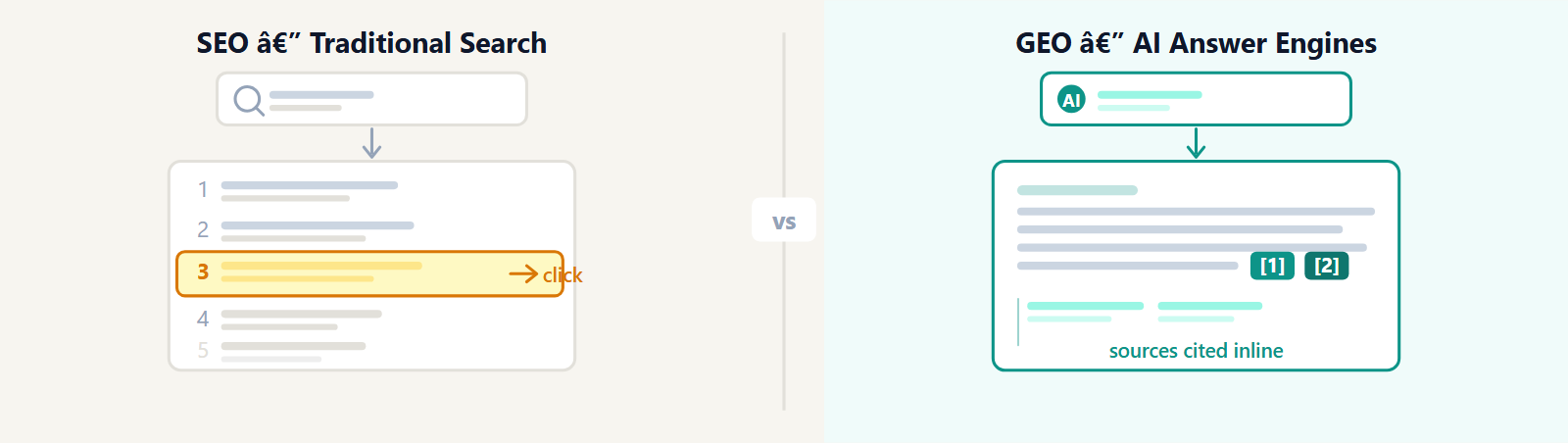
"GEO vs SEO" gets thrown around as a slogan more than it gets explained mechanically. Here are seven concrete differences that actually change what you do day to day.
1. Ranking position vs. synthesis into an answer

SEO optimizes for a position in a list of links. GEO optimizes for being pulled into and cited within a single generated answer — there's no #1 spot, only 'cited' or 'not cited.'
2. Keywords vs. entities and answers

SEO content is built around keyword targeting. GEO content is built around answering a specific question unambiguously and being clearly identifiable as an entity (a company, product, or author) rather than just a page that ranks for a phrase.
3. Backlinks vs. citations and mentions
Backlinks remain a trust signal for both. But GEO also rewards unlinked brand mentions across many independent sources — something classic link-based SEO metrics don't capture at all.
4. SERP position vs. presence in a narrative
A page can rank #8 in Google and still be the source an AI answer quotes directly, because relevance to the specific question matters more than aggregate ranking signals.
5. Full-site crawling vs. retrieval-augmented fetching
Search engines crawl and index your whole site ahead of time. Many AI answer engines fetch specific pages at query time based on a live index or search layer — which is why crawlability at the moment of the question matters as much as historical indexing.
6. Meta descriptions vs. quotable passages
A meta description is written to earn a click. A quotable passage is written to be lifted, nearly verbatim, into someone else's answer — which rewards clear, self-contained statements over clever, curiosity-gap copy.
7. Measuring rank vs. measuring citation rate
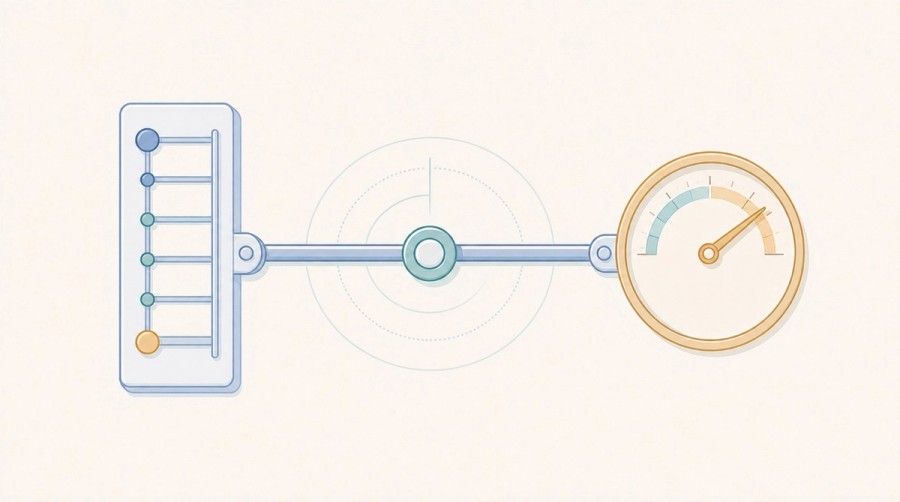
SEO has decades of standardized rank-tracking tooling. GEO measurement is younger and usually means directly asking AI systems your target questions and logging whether you're cited. For the foundational concepts behind all seven of these, see our original GEO vs SEO guide and our piece on building entity authority.
Apply this guide
Run an AI SEO audit before you change pages.
Use the audit to find which signal is holding the site back: crawler access, schema, llms.txt, content clarity, AI discovery, or entity strength.
- Best for pages that need a technical and content baseline.
- Next metric: AI readiness score plus the weakest signal category.
Frequently asked questions
Does GEO replace SEO?
No. Traditional search still drives most web traffic in 2026, and many GEO fundamentals (crawlability, clear content, authority signals) directly support classic SEO too. GEO adds on top of SEO, it doesn't replace it.
Which matters more for a small business in the US: GEO or SEO?
Both, but the starting point is usually the same set of fixes — crawlable pages, clear structured content, consistent entity naming — which benefit both channels simultaneously before you need to specialize.
Get the monthly State of GEO report
AI search readiness benchmarks, adoption stats, and the actions that move the needle — delivered monthly. No spam.
By submitting, you agree to receive the monthly GeoReady newsletter: benchmark data from the State of GEO dataset, practical GEO guidance, and product updates. You can unsubscribe anytime. See our Privacy Policy.